Power that Goes the Distance
Once the engine roars to life thanks to the starter, the alternator takes over – powering your vehicle’s electrical backbone with consistent current mile after mile. It keeps critical systems like headlights, HVAC, electronic controllers, sensors and ADAS functions running smoothly while recharging the battery along the way.
Heavy-duty alternators are engineered for high output – typically between 160 and 320 amps – and built for the long haul. Many feature advanced technology like remote sense, which monitors battery voltage more precisely to improve charging efficiency and keep your rig ready for anything.
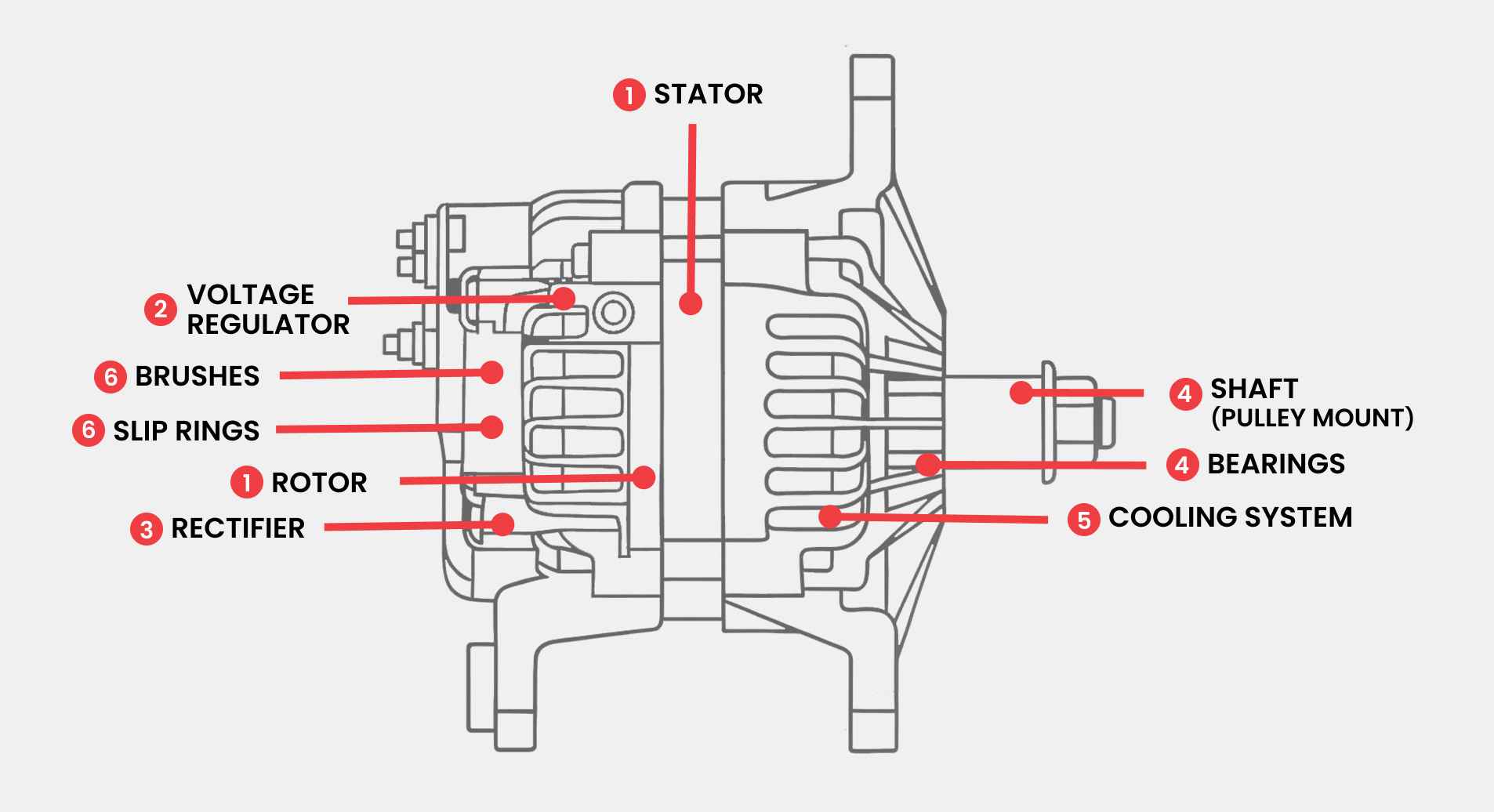
What are the Parts of an Alternator?
An alternator is packed with precision-engineered components that work together to power a vehicle’s electrical system and keep the battery charged.
Getting Ready
.png)
Rotor & Stator
The rotor spins inside the stator, generating the electrical energy needed to run the vehicle’s systems.
.png)
Voltage Regulator
Maintains a steady voltage level, protecting sensitive electronics from surges or drops.
.png)
Rectifier (Diodes)
Converts the alternator’s AC output into DC power, which the battery and vehicle systems require.
.png)
Pulley
Connects the alternator to the engine via a belt, enabling it to spin as the engine runs.
.png)
Cooling System
Uses fans or vents to prevent overheating and extend the life of internal components.
.png)
Brushes & Slip Rings
Work together to deliver electrical current to the spinning rotor while maintaining contact during rotation.

Bearings
Allow the rotor to spin smoothly with minimal friction, reducing wear and tear.
How Does an Alternator Work?
The alternator works by converting mechanical energy into electrical power while the engine is running, keeping the vehicle’s systems active and the battery charged.
- Engine Powers the Alternator – As the engine runs, it turns a serpentine belt connected to the alternator, which spins the rotor inside.
- Magnetic Field Creates Electricity – The spinning rotor generates a magnetic field that moves past coils of wire (the stator), producing electricity.
- AC Converted to DC – The rectifier changes the alternating current (AC) into direct current (DC), which powers the vehicle’s electronics and charges the battery.
- Regulated Voltage – The voltage regulator keeps the electrical output within a safe range to protect sensitive components.
- Powering Systems & Charging the Battery – The alternator supplies power to everything from headlights to infotainment, while keeping the battery recharged for the next start.
Symptoms of a Bad Alternator
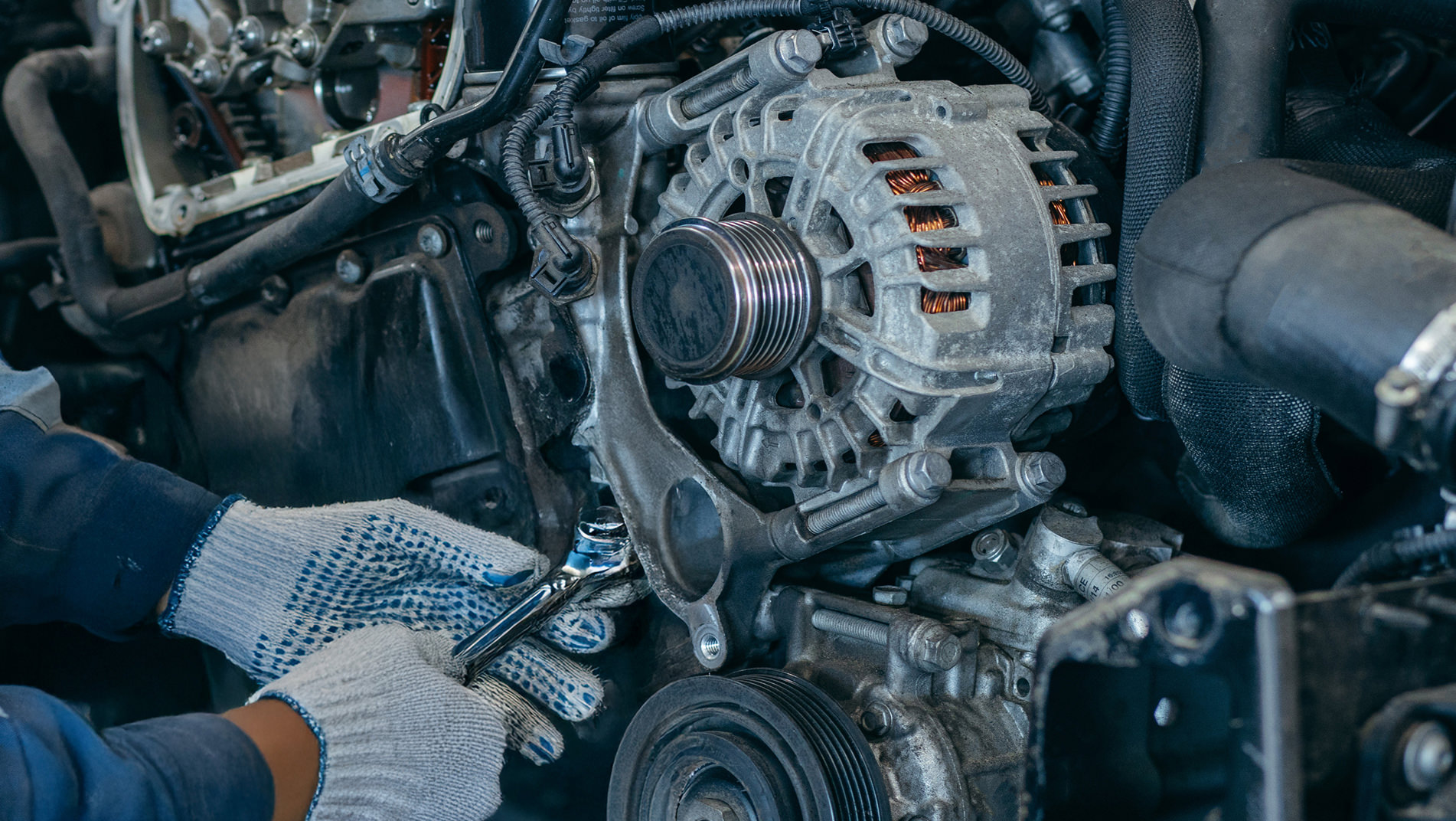
A bad alternator can trigger a chain reaction of electrical and operational issues in commercial vehicles. Without a reliable charge, the battery drains quickly, leading to dimming lights, erratic accessory function and potential stalling. Critical systems – like ABS and ADAS – can lose power, creating safety hazards. Left unchecked, alternator issues can damage other components. Recognizing the signs and symptoms of a failing alternator is key to keeping your rig on the road and reducing downtime.
Dim or Flickering Lights
As the alternator struggles to maintain consistent voltage, headlights and interior lights may dim or pulse – especially at idle or under load.
Dead Battery
A weak or failing alternator may not recharge the battery properly, leading to repeated jump-starts or a completely drained battery.
Battery Warning Light
An illuminated battery icon (or ALT/GEN light) on the dashboard often signals voltage irregularities tied to alternator performance.
Grinding or Whirring Noises
Worn bearings or internal damage can cause grinding, whining or high-pitched whirring sounds from the alternator.
Hard Starts or Stalling
Difficulty starting the engine or unexpected stalling may occur if the alternator isn’t supplying enough power to the engine electronics and fuel systems.
Electrical Accessories Acting Erratically
Power windows, HVAC fans or infotainment systems may operate sluggishly or shut off due to low voltage.
Burning Smell
Overheating from internal resistance or belt slippage can produce a rubbery or electrical burning odor near the alternator.

Frequent Jump-Starts
If the vehicle runs after a jump but dies shortly after, the alternator may not be charging the battery at all.
FP Diesel™ Alternators
A properly operating alternator is vital for commercial vehicles, supplying the continuous power needed to run electrical systems and maintain battery health. Count on a premium FP Diesel alternator to keep your vehicle powered. Engineered for durability and performance, FP Diesel alternators deliver consistent current to keep the battery charged and electronic components operating at their best.
Learn more about premium heavy-duty parts, consult our catalogs, find your car part, or find where to buy your auto part today.
The content in this article is for informational purposes only. You should consult with a certified technician or mechanic if you have questions relating to any of the topics covered herein. DRiV and its affiliates (including Federal-Mogul Motorparts LLC) will not be liable for any loss or damage caused by your reliance on any content.